
Services
Reality Capture & Digital Twin Services for Construction and Infrastructure
Leverage digital twins for accurate, real-time construction project insights. Enhance planning, monitoring, and collaboration with Darling's expert services.
AI Digital Twin Solutions Powered by Reality Capture
At Darling Geomatics, we leverage cutting-edge digital twin technology to create precise, data-rich virtual models of physical environments, helping clients across industries gain unprecedented insights and control over their assets. Whether it’s for industrial facilities, infrastructure projects , or complex construction sites , our engineering grade, georeferenced digital twin services provide an innovative solution for managing and optimizing physical environments in real-time.
Digital Twins Deliver Data-Driven Results
Reality Capture vs. Digital Twins: What Every Project Owner Should Know
Great question! Reality capture and digital twins are terms that are often used interchangeably and are closely related but not exactly the same. Reality capture is a foundational component of creating a digital twin, but not the same thing.
How Reality Capture and Digital Twins Work Together
- Reality Capture refers to the process of collecting 3D imagery of physical environments—typically using tools like Matterport and other 3D camera platforms as well as LiDAR (laser scanning) or photogrammetry. It's about capturing what looks real .
- Digital Twin terminology is normally used when a higher level of georeferencing of data is incorporated into the virtual representation of a physical object or environment. It often starts with reality capture data but then layers additional parameters including survey grade geolocation data. Digital twins can be used in computer applications that monitor real-time data, analytics, simulations, and interactivity to reflect and predict real-world behavior.
Digital Reality, Simplified: A Plain-Language Breakdown
- Reality capture = the raw input (scans, images, models).
- Digital twin = the georeferenced smart, interactive version built on that input.
What Is a Digital Twin in Construction & Infrastructure?
A digital twin is a highly accurate virtual replica of a physical space, asset, or system. Using advanced technologies like artificial intelligence (AI) , 3D laser scanning (LiDAR) , drones and photogrammetry, we capture every detail of your environment and translate it into an accurate digital model. These models allow clients to monitor, analyze, and simulate scenarios with ease – improving decision-making and project outcomes.
Reality Capture Methods: LiDAR, UAV, and Laser Scanning for Digital Twin Creation
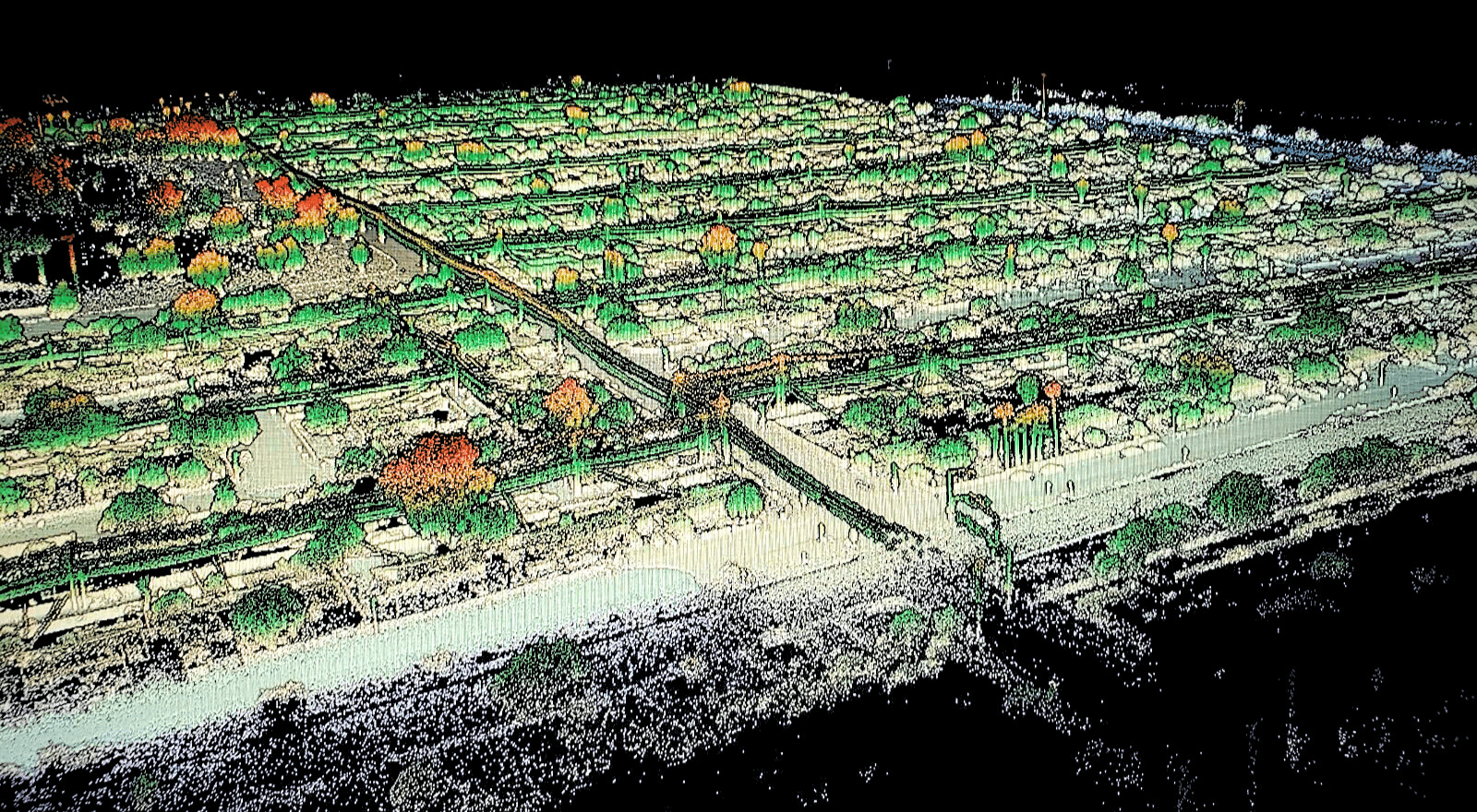
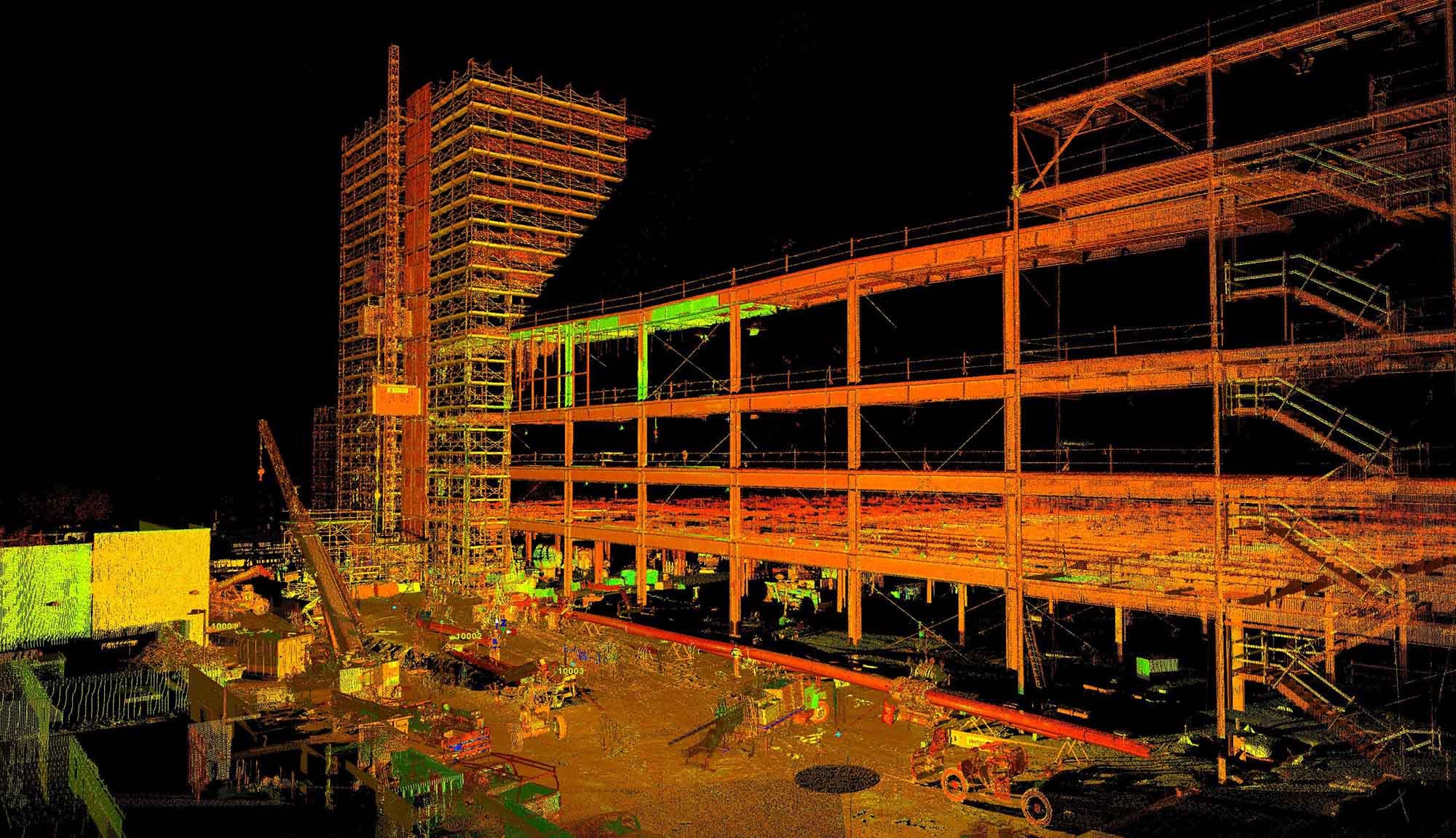
Darling Geomatics uses advanced reality capture methods—including LiDAR scans, 3D laser scanning, photogrammetry, and drone imaging—to collect highly accurate spatial data from the built and natural environment. These datasets are processed into dense point clouds and 3D meshes, which form the geometric backbone of a digital twin model . By layering in additional information such as asset attributes, site conditions, and time-based updates, the digital twin evolves into a living replica of the real-world site that supports analysis, collaboration, and better decision-making throughout the project lifecycle.
AI Digital Twin & Reality Capture Services for Every Project Scale
- 3D Laser Scanning & Data Capture Our team utilizes state-of-the-art 3D laser scanning (LiDAR) to capture highly detailed georeferenced point clouds of your assets, delivering the foundation for a fully immersive digital environment.
- Integration with Existing Systems Seamlessly integrate your digital twin data with existing Building Information Modeling (BIM) , Geographic Information Systems (GIS), and other software platforms for enhanced functionality and asset management.
- Real-Time Monitoring & Simulations Monitor your operations in real time and run simulations to predict maintenance needs, optimize performance, and prevent costly downtime.
- Collaborative Workspaces Engage teams across departments and locations with a single, comprehensive model, facilitating better collaboration and decision-making across the board.
Benefits of Reality Capture and Digital Twins in Construction
- Improved Accuracy Our engineering grade georeferenced digital twins deliver a high level of precision, providing detailed models that capture every element of your environment, ensuring reliable data for analysis and planning.
- Enhanced Operational Efficiency With real-time data and simulations, optimize the performance of your assets, reduce risks, and streamline workflows.
- Cost Savings & Sustainability By predicting issues before they occur, digital twins help reduce maintenance costs, prevent operations downtime, and enable more sustainable resource management.
- Better Decision Making Access a dynamic, interactive model that provides valuable insights to guide important project and operational decisions.
Practical Applications: Digital Twins Across Construction, Infrastructure & Mining
Aerospace & Aviation Enhance efficiency and safety in airports and space ports by simulating real-time data from systems and infrastructure for renovations and predictive maintenance.
Civil Engineering & Infrastructure Optimize your project planning and execution by visualizing your site in real-time, identifying potential issues early, and keeping projects on track.
Construction & Land Development Streamline construction by providing real-time, accurately georeferenced data to optimize resources and minimize project risks.
Sports & Recreational Facilities Design and complete renovations and optimize space usage, maintenance, and energy efficiency with real-time data.
Healthcare & Medical Facilities Optimize facility planning and equipment usage, improving safety with accurate, data-driven insights.
Manufacturing & Industrial Sites Develop digital twins for product testing, employee training of complex processes, performance analysis. Smart facilities utilize digital twins to simulate processes, predict maintenance, and inform decision making.
Mining & Natural Resources Manage large-scale operations and assets remotely, ensuring optimal performance, safety, and resource management.
Renewable Energy & Power Enhance the management and efficiency of renewable energy facilities , such as solar and wind farms, by using real-time performance data.
Across industries, digital twins are the conduit for easier communications between clients and stakeholders, they streamline project management, and increase overall sustainability. Our digital twin services provide an innovative solution for managing and optimizing physical environments in real-time.
Flexible Digital Reality Deliverables: Point Cloud, BIM, CAD & AI-Ready Formats
We can deliver data in virtually any format you require:
- 2D CAD drawings
- 3D CAD models
- 2D orthographic drawings
- 3D Revit models
- 3D Solid models
- Construction progress flights
- FLIR radiometric (thermal) images, videos and maps
- Fly-through videos
- Digital elevation model (DEM)
- Digital surface model (DSM)
- Digital terrain model (DTM)
- Monitoring of change over time
- Georeferenced point clouds
- Engineering grade topographic mapping in AutoCAD and ESRI
- True color georeferenced orthomosaics Volumetrics
- Other
FAQ: Reality Capture & Digital Twin Services
What is a digital twin in construction and infrastructure?
A digital twin is a precise, georeferenced 3D model of a physical asset — a building, mine, pipeline, or infrastructure system — built from real-world data captured using LiDAR, UAV photogrammetry , or terrestrial laser scanning. Unlike a design model, a digital twin reflects the asset as it actually exists , enabling project teams to visualize, analyze, and make decisions without setting foot on site. In construction and infrastructure, digital twins are used for progress monitoring, clash detection, safety planning, and long-term asset management.
What are the main types of digital twins, and which is right for my project?
Digital twins generally fall into four categories: component twins (individual parts or assets), asset twins (a complete piece of equipment or structure), system twins (interconnected assets working together), and process twins (operational workflows and sequences). For construction and industrial projects, Darling Geomatics typically delivers asset and system-level digital twins — capturing everything from a single building floor to an entire surface-to-underground mining operation within one georeferenced dataset.
Is a digital twin the same as AI, or does it use AI?
A digital twin itself is not AI — it is a high-accuracy 3D representation of a physical asset built from reality capture data. However, AI tools are increasingly layered on top of digital twins to enable predictive analytics, automated change detection, and anomaly identification. At Darling Geomatics, we deliver AI-ready digital twin datasets — structured point clouds, scan-to-BIM models, and georeferenced deliverables — in formats that integrate directly with AI platforms and asset management systems.
What is the difference between reality capture and a digital twin?
Reality capture is the process — using LiDAR, UAV photogrammetry, or laser scanning to collect billions of data points from a physical site. A digital twin is the product — the georeferenced, intelligent 3D model built from that captured data. Think of reality capture as the survey, and the digital twin as the deliverable. Darling Geomatics handles both: field data acquisition and the processing, registration, and delivery of finished digital twin assets.
What is an example of a digital twin project?
One example: Darling Geomatics completed a full surface-to-subsurface digital twin for an active mining operation — beginning with aerial LiDAR of the surface headframe, descending 1,700 feet down the vertical shaft, and mapping 3 miles of underground workings. The result was a single, fully georeferenced point cloud dataset used for safety planning, volumetric analysis, and infrastructure coordination. Similar digital twin workflows apply to water treatment facilities, bridges, industrial plants, and large commercial construction projects.
What data formats are delivered with a digital twin from Darling Geomatics?
Darling Geomatics delivers digital twin datasets in the formats your engineering, GIS, or operations teams actually use — including point cloud files (LAS, LAZ, RCP), scan-to-BIM models (Revit, IFC), CAD-compatible exports (DWG, DXF), orthomosaic imagery (GeoTIFF), and web-based 3D viewers for stakeholder access without specialized software. Deliverable formats are tailored to your project workflow at the outset of every engagement.
How accurate is a digital twin created from reality capture?
Darling Geomatics delivers digital twin datasets in the formats your engineering, GIS, or operations teams actually use — including point cloud files (LAS, LAZ, RCP), scan-to-BIM models (Revit, IFC), CAD-compatible exports (DWG, DXF), orthomosaic imagery (GeoTIFF), and web-based 3D viewers for stakeholder access without specialized software. Deliverable formats are tailored to your project workflow at the outset of every engagement.
Explore More: Reality Capture & Digital Twin Insights…
- Early clash detection with 3D Scanning (Case study)
- Digital Twins with AI , BIM and As-Built Experts (Applications)
- Unlocking the Potential of Digital Twins: How They Revolutionize Industries (Blog article)
- International Airport Terminal Reconstruction (YouTube video)
More services
3D Scanning
Darling Geomatics delivers certified point cloud surveys and 3D LiDAR scanning using terrestrial LiDAR and drone integration for complete project accuracy.
Explore →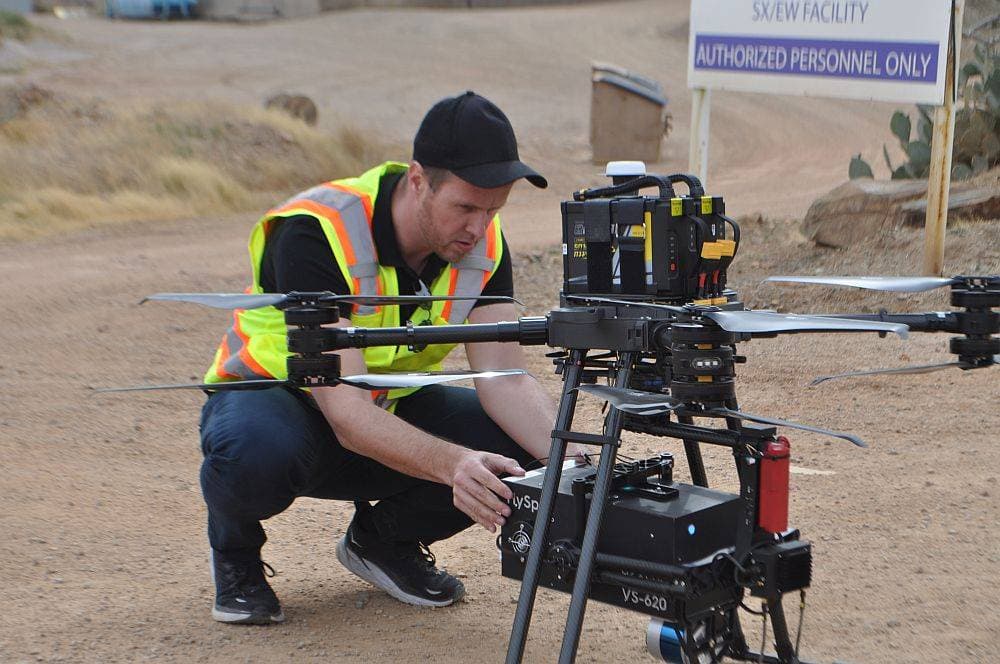
Drone Surveying
Professional drone surveying delivers accurate aerial mapping and topographic data for construction, mining, and land development. FAA-certified pilots, survey-grade accuracy.
Explore →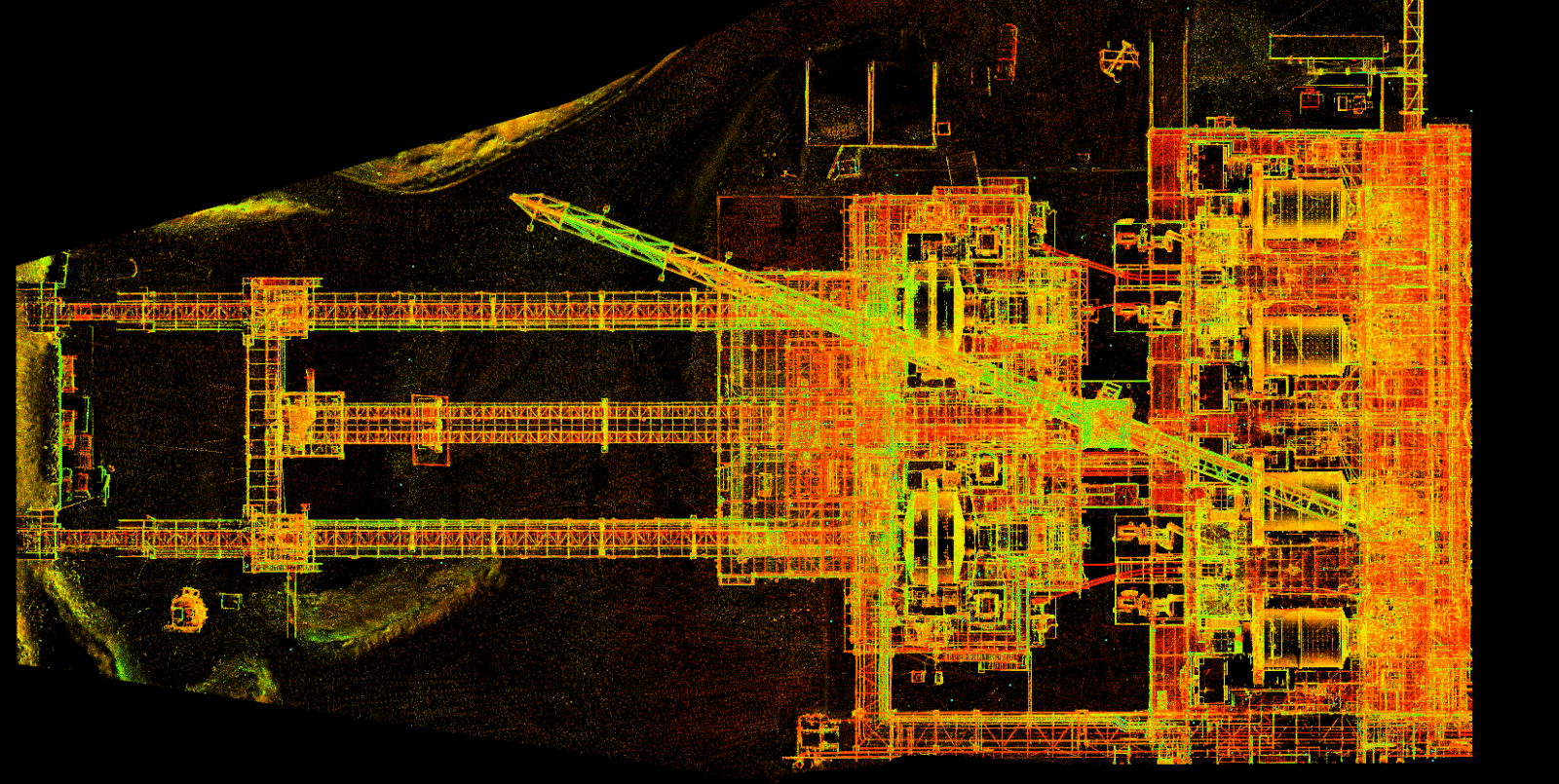
Easement Surveys
Darling Geomatics offers easement surveying services to document rights-of-way, utilities, and linear corridors with accuracy.
Explore →Plan your next capture.
Tell us about the site and the deliverables you need. Our team will recommend the right mix of drone, terrestrial and mobile capture.